Tag Archives: names

Top 11 for 2011

No Gravatar

I can’t believe the end of the year is on us already. It’s been a good year for me and I hope for you, too.

Here’s the eleven most popular posts this year:

  1. Character Questionnaire: Just what the name says–it’s a character questionnaire to help GMs and players alike flesh out important characters. This has been the number one favorite page since Evil Machinations began in 2009.
  2. Where are we again?” Creating Unique Fantasy Cities and Towns: List of on-line resources that can help you create cities and towns for your game world.
  3. February Blog Carnival: Worldbuilding: Check out the comments of this post for great links to blog articles about worldbuilding. This was the introductory post for when I hosted the RPG Bloggers blog carnival in February of this year.
  4. Building Better NPCs III: Character Webs: What are character webs and how can you use them to help bring your NPCs to life. Also a perennial favorite post.
  5. X Marks the Spot: 11 Map Making Tutorials: Another list of on-line resources, this one on making great maps for your game.
  6. And *Then* What Happened?: Using Adventure Seeds/Hooks/Starts/Ideas: Ever come across an adventure seed you really wanted to use, but you couldn’t figure out how to turn it into a full adventure? This post is the first in a series that can help.
  7. Creating the Adventure Outline: Using Adventure Seeds/Hooks/Starts/Ideas, pt. 9: Another post in the above series, this one on how to develop you idea into game outline or flowchart to make running that adventure a little easier.
  8. Handling Problem Players: A list of web resources with great ideas on how to handle problem players.
  9. Finding Events: Using Adventure Seeds/Hooks/Starts/Ideas,  pt. 8: How to come up with the encounters and challenges that make up an adventure.
  10. Campaign Worksheet: The campaign worksheet I use when creating a new campaign.
  11. Beyond ‘Fred’: Russian Names for Characters: A list of Russian names for PCs and NPCs.

There they are: the top eleven posts for 2011. Thanks to all my readers–you’re the reason I’m still here and looking forward to a great 2012.

Popularity: 11% [?]

Beyond ‘Fred’: Names for Victorian Games

No Gravatar

Everyone has trouble coming up with character names, at least occasionally. Especially GMs, who frequently have to come up with names on the spur of the moment. That’s what this series, “Beyond ‘Fred’” is all about: providing lists of names from other times and cultures so you can find a name that feels right for the time and place of your game.

In this series, I’m more interested in finding names that capture the feel of various game settings. Historical accuracy is not a factor here. In the spirit of my new Castle Falkenstein campaign, here’s a list of names common in Victorian England and America:

Male Names

  • Aaron
  • Alonzo
  • Ambrose
  • Barnabas
  • Bartholomew
  • Bernard
  • Byron
  • Cecil
  • Cyril
  • Clarence
  • Clement (Clem)
  • Clinton (Clint)
  • David
  • Edward (Ned)
  • Edwin
  • Eldon
  • Ernest
  • Ezra
  • Francis
  • Franklin
  • Fredrick
  • Gabriel
  • Garrett
  • Harland
  • Harrison
  • Henry
  • Horace
  • Isaac
  • James
  • John
  • Jasper
  • Julian
  • Lawrence
  • Leander
  • Louis
  • Maurice
  • Maxwell
  • Merriweather
  • Micajah
  • Morris
  • Nathaniel (Nate, Nathan, Nat)
  • Nimrod
  • Oral
  • Orville
  • Patrick
  • Perry
  • Peter
  • Reuben
  • Richard (Dick, Rich)
  • Samuel
  • Simeon
  • Thaddeus
  • Thomas (Tom)
  • Victor
  • Walter
  • Wilfred

Female Names

  • Abigail (Abby)
  • Agnes
  • Beatrice
  • Charity
  • Charlotte
  • Chastity
  • Constance
  • Dorothy (Dot)
  • Elizabeth (Bess, Betsy, Bessie, Eliza, Liza, Lizzie)
  • Eudora
  • Eva
  • Fern
  • Fidelia
  • Frances
  • Flora
  • Geneve
  • Genevieve
  • Grace
  • Hattie
  • Helene
  • Hester
  • Irene
  • Ivy
  • Jessamine
  • Josephine
  • Judith
  • Katherine
  • Lenora
  • Letitia
  • Lily
  • Lottie
  • Margaret
  • Maude
  • Mercy
  • Minerva
  • Molly
  • Nellie
  • Patsy
  • Parthena
  • Permelia
  • Phoebe
  • Rowena
  • Rufina
  • Sarah
  • Sarah Anne (Sarah Elizabeth)
  • Sophronia
  • Theodosia
  • Victoria
  • Winnifred (Winnie)

Biblical names were very popular in the Victorian Era, as were virtues (such as Chastity or Hope), and flowers (primarily for women). Both boys and girls were also given “nature” names, such as Forrest, Fern

Sources

Other “Beyond ‘Fred’” posts:


Popularity: 24% [?]

Beyond “Fred”: More Anglo-Saxon Names

No Gravatar

You can’t have a character without a name. Yet, sometimes, creating the name is the hardest thing about making a character. “Beyond ‘Fred’” is a series that lists names from history and other cultures to help you find that perfect character name.

This time, we’re covering Anglo-Saxon names again, they’re just that cool.  I’m doing something I haven’t done before in this series, and that’s giving some pronunciation guides, along with the name’s meaning. That’s because Anglo-Saxon names have meanings that are so perfect for fantasy games. My pronunciations may not be exactly perfect, but they’ll work for fantasy games.

Because of that, I’ve repeated some of my favorite names from the first Anglo-Saxon names post, so that you have an idea of how to pronounce them. Of course, if it’s fantasy, you can pronounce these any way you want to ;) .

As always, I am more concerned with “flavor” than historical accuracy. So, without further ado….

Male Names

Æðelbald (A-thel-bald): nobly bright
Ælfhere (Alf-he-re. These are short “e”s, as in “red”): elf warrior
Ælfred (Alf-red): elf counsel
Ælfwine (Alf-win-e): elf friend
Æthelwulf (A-thel-wülf): noble wolf
Arlys (AR-loos): honorable
Baldric (Bald-ric): bold power
Banan (BAN-an): slayer
Baylor (BAA-oo-lore): horse trainer
Beorhtraed (BE-ore-tread. Short “e”, like “bed”): bright counsel
Betlic (BET-lick): Splendid
Boden (BO-den. With a short “o”, like “pot”): messenger
Cædmon (CAD-mon. With a short “o”, like “pot”): poet
Cæna (CHAIN-a): brave, fierce, keen, warlike
Canute (KA-noot-e): knot
Cedric (CHED-rick): renown leader
Dægal (DA-gall): dweller by the dark stream
Deogol (DE-o-gol): secret
Deorwine (DE-or-win-e): dear friend
Drefan (DRE-van): trouble
Eadmar (E-ad-mar): happy and illustrious
Earh (E-are): coward
Edwyn (ED-woon): valued
Faran (FAR-ann): advances
Firman (FIR-man): traveler
Frithuric (FRI-thu-rick): peace ruler
Fyren (FOO-ren): wicked
Galan (Gaa-laan): sing
Gar (GAAR): spear
Gifre (GIF-re. Short “i”, like “gift”):  greedy
Gim (GIM. Short “i”, like “gift”): gem
Godwine (GOD-win-e): God’s friend
Grindan (GRIN-dan): sharp
Halwende (HALL-wen-de): lonely
Hengist (HEN-yist): stallion
Ida (ID-a): rich
Irwyn (IRR-woon): sea lover
Kenric (KEN-rick): fearless leader
Landry (LAN-dree): ruler
Leodgar (LE-odd-gar): people’s spear
Lufian (LUV-ee-an): love
Magan (MA-gan): competent
Merwyn (MER-woon): good friend
Nyle (NOO-le): desire
Osbeorn (OS-beh-arn): divine bear
Rædan (RAW-dan): advisor
Raynar (RA-oo-nar): warrior of judgement
Raulf (RA-ulf): house wolf
Rowe (Rah-we): red-haired
Sar (SAR): pain
Scead (SKE-ad): shade
Scur (SKOOR): storm
Seleferth (SELL-e-ferrth): hall life
Selwyn (SEL-woon): fitting friend
Sherard (SER-ard): glorious valor. I’m guessing this is actually “Serard”, since I’ve never seen an “sh” sound in true Anglo-Saxon. It’s usually a modern interpretation
Sigefried (SIG-e-fri-ed): conquering peace
Temman (TEM-man): tame
Þunor (THOO-nar): thunder
Thurgis (THOOR-yis): Thor’s hostage
Wassa (WAS-sa): satyr(?)–uncertain about the exact meaning of this
Wilfrith (WIL-frith): resolute peace (my actual guess would be “stern friend”)
Winfrith (WIN-frith): friend of peace
Wulfric (WÜL-frick): wolf ruler

Female Names

Æðelþryð (A-thel-throoth):  noble threatener
Ælfgifu (ALF-gi-voo): elf gift
Ælflæd (ALF-lad): elf beauty
Æryn (AR-oon): elf-like
Ardith (AR-dith): good war
Bemia (BEH-mih-a): battle maiden
Bysen (BOO-sen): unique
Cate (KA-te): innocent
Cendra (KEN-dra): knowledgeable, understands
Cwen (KE-wen): queen
Cyneburga (KOO-ne-burr-ga): pledge of kindred
Darel (DAR-el): little beloved
Eadhild (E-ad-hild. The first “e” is a short e): rich battle maid
Eadlin (E-ad-lin): princess
Edita (E-dit-a): joyful
Eldrita (ELD-rit-a): prudent advisor
Erna (ER-na): reserved, shy
Faina (FA-in-a): joyful
Frithuswith (FRI-thoos-with. Both “i”s are short): peace strength
Gisa (GI-sa): hostage
Hreða (HRE-tha. The “hr” is an unvoiced r. Say ‘H’, then ‘r’ very quickly): an Anglo-Saxon goddess
Hrothwyn (HROTH-woon. The “hr” is an unvoiced r. Say ‘H’, then ‘r’ very quickly): famous joy
Leola (LE-ola. The “o” is short, like in “pot”): deer, swift (as a deer)
Maéda (Ma-ee-da):  maiden
Mildryth (MILLED-rooth): mild pledge
Muriel (Muh-ri-el): myrrh, perfumed
Ora (AH-rah): money
Orfa (AH-fah): courageous
Rowena (RAW-en-a): white skirt
Synne (SOON-ne): gift of the sun
Wilona (WILL-ahn-a): hoped for
Ymma (OOM-ma): work

[Image courtesy of micronova via Flickr Creative Commons]

Sources

Other “Beyond Fred” Posts

Popularity: 33% [?]

Beyond “Fred”: German Names for Characters

No Gravatar

Sometimes the hardest part of building a character is  coming up with a good name. You can always take a name from Tolkien or other fantasy novels, but you’ve seen those names over and over and you want something a little different, but not way out there. How about an historical name? Or one from a different culture?

This time I’m covering German names. As always, I’m selecting these for use in fantasy games, so many of these names may be archaic or uncommon.

[Photo courtesy of kevindooley via Flickr Creative Commons 2.0]

Male Names

  • Abelard
  • Adalbert
  • Alban
  • Alwin
  • Baldric
  • Berndt
  • Burkhard
  • Carsten
  • Dagmar
  • Detlef
  • Dierk
  • Eber
  • Etzel
  • Ewald
  • Fastred
  • Feirefiz
  • Ferdi
  • Gairovald
  • Garrit
  • Gerd
  • Gisil
  • Gundrun
  • Hagan
  • Hartwin
  • Heilgar
  • Hroda
  • Ingo
  • Isidor
  • Ivo
  • Kai
  • Kasimir
  • Kayetan
  • Kilian
  • Korbinian
  • Körbl
  • Lanzo
  • Lennart
  • Lothar
  • Malger
  • Markus
  • Marwin
  • Meine
  • Merten
  • Odo
  • Othmar
  • Poldi
  • Quirin
  • Raban
  • Raimund
  • Reto
  • Ruedi
  • Seppel
  • Severin
  • Sigi
  • Tancred
  • Thorben
  • Tielo
  • Traugott
  • Ulrich
  • Urs
  • Volker
  • Waldemar
  • Wendelin
  • Wenzel
  • Wolfram
  • Yvo

Female Names

  • Adelina
  • Aleida
  • Aloisia
  • Beate
  • Bettina
  • Bruna
  • Cäcilie
  • Conradine
  • Corina
  • Dörthe
  • Ebbe
  • Elfriede (Elfie)
  • Emlin
  • Erna
  • Frauke
  • Gerde
  • Gerlinde
  • Gisela
  • Gudrun
  • Heike
  • Helma
  • Hiltrud
  • Ilma
  • Imke
  • Imme
  • Ishild
  • Jana
  • Kasimira
  • Kinge
  • Kirsa
  • Kunigunde
  • Lene
  • Liesa
  • Liesel
  • Loreley
  • Magda
  • Malwine
  • Maike
  • Mareike
  • Maja
  • Marlis
  • Nadja
  • Nele
  • Oda
  • Odelia
  • Ottila
  • Raimunde
  • Renate
  • Ria
  • Rike
  • Roswitha
  • Salida
  • Senta
  • Sidonia
  • Silke
  • Tabea
  • Thekla
  • Thora
  • Valeska
  • Verena
  • Vreni
  • Wiebke
  • Zenzi
  • Ziska

German Surnames

  • Abt
  • Amsel
  • Bader
  • Bauer
  • Baum
  • Beike
  • Daecher
  • Duerr
  • Eichel
  • Engal
  • Faerber
  • Fiedler
  • Foerster
  • Fruehauf
  • Gaertner
  • Gersten
  • Grunewald
  • Hoch
  • Holtzmann
  • Hueber
  • Jaeger
  • Kalb
  • Kappel
  • Klein
  • Kluge
  • Koch
  • Koenig
  • Lang
  • Lehrer
  • Luft
  • Metzger
  • Moench
  • Nacht
  • Nadel
  • Oster
  • Pfaff
  • Reiniger
  • Ritter
  • Sankt
  • Schreiber
  • Schuster
  • Seiler
  • Theiss
  • Traugott
  • Trommler
  • Urner
  • Vogt
  • Wannemaker
  • Wirth
  • Zweig

Sources

Other “Beyond ‘Fred’” Posts

Popularity: 31% [?]

Beyond ‘Fred’: Ancient Egyptian Names

No Gravatar

Sometimes the hardest part of building a character is  coming up with a good name. You can always take a name from Tolkien or other fantasy novels, but you’ve seen those names over and over and you want something a little different, but not way out there. How about an historical name? Or one from a different culture? So far in this series, we’ve covered Roman, Russian, Italian, and Anglo-Saxon names. If none of these suit you, how about an Ancient Egyptian one?

Ancient Egyptian Name Structure

Names in ancient Egypt seen to have been chosen with great care for their meaning. Many contained the name of a god, as well as common words or phrases and could be used by either men or women. In some cases, as needed for identification, a person might be known by two names: one as their formal name and another, which was what they were called most of the time.

As with all posts in this series, the list here isn’t intended to be historically accurate. It’s merely providing suggestions for use with role-playing games. If historical accuracy is important, you’ll want to check your name against reliable historical records.

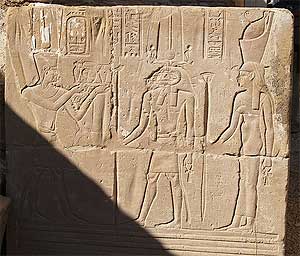
(Photo courtesy of Flickr, ©isawnyu 2010)

Male Names

  • Abi
  • Ahmose
  • Amenemhet
  • Ahmose
  • Bes
  • Den
  • Djet
  • Hekanakht
  • Heru
  • Horemheb
  • Kamose
  • Menes
  • Metesouphis
  • Nebnefer
  • Neferirkare
  • Padiu
  • Pakamen
  • Pakapu
  • Panhsj
  • Seti
  • Siptah
  • Ti

Female Names

  • Achotep
  • Ahori
  • Amenirdis
  • Beset
  • Cena
  • Henut
  • Hetepet
  • Iutenheb
  • Khentkaus
  • Meritnit
  • Mutemwia
  • Mutnodjmet
  • Naunakht
  • Nefertari
  • Nitocris
  • Nithotep
  • Peseshet
  • Rennefer
  • Sacmis
  • Sekhet
  • Senen
  • Sobkneferu
  • Taiemniut
  • Tawaret

Sources

Other Beyond Fred Posts

Popularity: unranked [?]

Beyond “Fred”: Anglo-Saxon Names for Characters

No Gravatar

Finding a good name is sometimes the hardest part of designing an NPC. You want something more exotic than “Fred the Fighter”, but “Frewxyque the Grand Thunder Duke” becomes too hard to say with a straight face after the first first time.  Baby name books can help, but some of the best names come from real-world sources. Beyond ‘Fred’ is a series that lists names from various sources broken down by region and/or time period.

We’re doing Anglo-Saxon names this time. Some of these names are still in use, but others are as unusual as any gamer-made names. As usual, I’ve separated them out into male and female names.

Name Structure

Historically, Anglo-Saxons had no surnames as we would think of them. Sometimes, a person (usually aristrocracy) would be identified by a trait or play on words  (Aethylred the Unready, for example) or by a connection to a famous ancestor. If your game setting requires a character to have more than one name, you can always use a place name (“of Meadowbrook”), a profession name (“Smith” or “the Baker”), or “son/daughter of” and a parent’s name (“Oswynson”).

Note: many Anglo-Saxon names use the letter “eth” (Ð, ð). Since I’m not concerned with historical accuracy here, I’ve substituted “th” for any eth in the names below.

(Photo courtesy of Flickr, ©Snake3yes 2006)

Male Names

  • Acwellen
  • Aethelred
  • Aethelwulf
  • Aheawan
  • Badanoth
  • Baldred
  • Beornric
  • Caedmon
  • Cælin
  • Cenhelm
  • Ceolwulf
  • Cuthen
  • Delwyn
  • Denewulf
  • Eadfrid
  • Eadric
  • Eanlac
  • Elwyn
  • Fremund
  • Frithulaf
  • Godfrith
  • Grimbald
  • Guthred
  • Hardred
  • Hereric
  • Horik
  • Horsa
  • Idmaer
  • Ingwulf
  • Irminric
  • Leofric
  • Liudolf
  • Merewald
  • Morcar
  • Ordmaer
  • Osred
  • Oswyn
  • Raedfrid
  • Rægenhere
  • Reduald
  • Romund
  • Saeward
  • Selred
  • Sigeric
  • Sighere
  • Stithwulf
  • Swithun
  • Theodgar
  • Thrydwulf
  • Thunor
  • Trumwin
  • Turec
  • Waldere
  • Wihtlac
  • Yric
  • Wulfhere

Female Names

  • Aerlene
  • Aethelthryth
  • Alduulf
  • Alodia
  • Anlienisse
  • Baldeth
  • Beadohild
  • Bregusuid
  • Burwena
  • Ceolwynn
  • Cynethryth
  • Cynwise
  • Domneva
  • Eadwynn
  • Eanfled
  • Eanwin
  • Eoforwine
  • Frigyth
  • Godwyna
  • Golderon
  • Hendina
  • Hild (or Hilda)
  • Hrotsvitha
  • Mildgyth
  • Modthryth
  • Oslafa
  • Osthryd
  • Rimilda
  • Roswitha
  • Saewynn
  • Somerild
  • Sunngifu
  • Tonild
  • Tortgith
  • Turgiua
  • Wenyld
  • Winfrith
  • Wulfrun
  • Wulfwynn
  • Wynflead

Sources

Other “Beyond Fred” Posts

Popularity: unranked [?]

Beyond ‘Fred’: Italian Names for Characters

No Gravatar
Italian names

Image by cloudsoup via Flickr

Tired of games where all the characters are named Ariel or Thorin? What a character name that sounds distinctive but not too far out? What about using a real-world name? Perhaps something historical or from another culture. In earlier editions of Beyond Fred, I covered Roman and Russian names. But what if you want something more fluid or lyrical sounding? Perhaps an Italian name will fit the bill.

Italian Name Structure

Like most Western names, Italian names are comprised of a first name followed by a last name, usually the father’s name. According to Wikipedia, occasionally in official documents the last name will be listed first.

Pronouncing Italian names can be a little tricky. Pronunciation of Italian names has a search box where you can enter a name and listen to the correct pronunciation. You can also find detailed information on pronouncing Italian names at Roma Interactive.

These are by no means historically accurate. These lists are intended to be used for gaming where historical accuracy isn’t as important as how a name sounds.

Italian Names

Male Names

  • Abaco
  • Acario
  • Addo
  • Agosto
  • Arrone
  • Balderico
  • Beltramo
  • Casimiro
  • Clodoveo
  • Dalmazio
  • Ercole
  • Fedele
  • Giacomo
  • Lorenzo
  • Lothario
  • Marcello
  • Massimo
  • Orazio
  • Pino
  • Raffaele
  • Raul
  • Rinaldo
  • Rodolfo
  • Salvetore
  • Serafino
  • Serge
  • Severino
  • Tancredo
  • Vencentio
  • Vittore
  • Zanipolo

Female Names

  • Acilia
  • Altea
  • Aniela
  • Assunta
  • Benigna
  • Bibiana
  • Casilda
  • Chiara
  • Damiana
  • Donata
  • Esta
  • Fiammetta
  • Fiorella
  • Ghita
  • Giacinta
  • Isabella
  • Jolanda
  • Lucia
  • Marsala
  • Mia
  • Perla
  • Rosabla
  • Sidonia
  • Sienna
  • Tessa
  • Vani
  • Varanese
  • Venitia
  • Vittoria
  • Zita
  • Zola

Surnames

  • Bianchi
  • Cavallo
  • Contadino
  • de Luca
  • di Genova
  • Esposito
  • Forni
  • La Porta
  • Martelli
  • Montagna
  • Mosca
  • Rossi
  • Selvaggio
  • Tenagila
  • Trovato
  • Volpe

Other Articles in this Series

Sources

Enhanced by Zemanta

Popularity: unranked [?]

What’s in a Name?: Alphabet

No Gravatar

Here it is — the final post of our What’s in a Name? series. Today we’re talking about alphabets.

alphabet spiralWell, actually not about alphabets. While you can create a whole new alphabet for your language, it’s a lot of work to do just to create names. Especially since unless you’re writing out all of your game materials by hand, you’ve got to create either a true font or a set of dingbats to represent your new alphabet.

You can actually create something unique by using Roman letters. After all, most languages in Europe and the Americas all use some variation of Roman letters and they all manage to look different.

(Photo courtesy of: http://www.flickr.com/photos/fdecomite/ / CC BY 2.0)

Go Back to Your Sounds

Remember the list of sounds we made back on the Day 2? It’s time to pull that out. What you want to do is assign one letter or letter combination to every sound you have. What you’re creating here is actually called an orthography.

Now, you can mix up the letters and sounds — but I wouldn’t recommend it. What I mean by that is, you can assign the “sh” sound to the letter “a”. I wouldn’t recommend it because it’ll be a constant headache for you and your players. You’ll constantly have to look back and forth between your  names and your “alphabet” and I’d be very surprised if your players didn’t revolt by the second game session as they try to remember that “Shewsberry” is actually pronounced “thantcamms”.

What you do want to do though, is settle on one way of writing each phoneme you have. Even though in English (for example) “c” can make an “s” or a “k” sound and more than one letter in the alphabet can make the same sound, for simplicity’s sake, I’d recommend one sound, one letter combinations.  That way, you know that “Cebunclane” is always pronounced “ke-bunk-la-ne” and not “see-boon-clain”.

A Note About Diacritics

One obvious way to make your language look different is by using a lot of diacritics. But this can also create a huge headache as you have to remember how to type them or pause frequently while writing to use the “insert special character” (or equivalent) function of your computer. And if you ever want to post your names online, keep in mind that HTML has a very limited set of special characters it supports.

You can actually get a very different look to your names just by using combinations of letters not normally found in English and peppered with a few very common diacritics. Here’s some examples:

  • Nord-Pas-de-Calais (French)
  • Lübeck (German)
  • Zaragoza (Spanish)
  • Algyógy (Hungarian)
  • Bizusa-Bâi (Romanian)

Have fun with this. It can be some work, initially, but once you’ve created it, it really does help give your world a unique flavor. Then, if you decide you do want to create a full language for your world at a later date, you’ve already laid some of the foundation work.

This article series was inspired by Mark Rosenfelder’s Language Construction Kit and I’ve drawn on it heavily as a resource. If you’re interested in a creating a language of your own, his site is a great place to start.

Other Posts in This Series

Related articles by Zemanta

Reblog this post [with Zemanta]

Popularity: unranked [?]

What’s in a Name? Stress is Good

No Gravatar
Stress the right syllable
Image by quinn.anya via Flickr

It’s day 3 of our series on creating a naming language and today we’re talking about stress. Not that kind of stress — this is the emphasis we place on one syllable over the others within a word or name. Setting a set stress pattern for names can help keep your language from sounding like English with funny pronunciations.

In English, we learn which syllables to stress on a word-by-word basis. Indeed, different regions of the English speaking world can stress different syllables of the same word and names are no exception. Changing the stress pattern of word or name can change it’s pronunciation. For example, most non-natives will pronounce my home region of Oregon’s Willamette valley as WILL-a-met or-EE-gone, when it’s actuality pronounced will-A-met (to rhyme with “damn it”) OR-e-gun. Another example is the word “laboratory”. In American English, the stress is on the first syllable (LAB-or-a-tory) while in England, the stress is on the second syllable (lab-OR-a-tory).

Other languages are more regular. Hungarian stresses the first syllable, while Polish stresses the second-to-last syllable. Other languages can have more complex stress rules, depending on vowel placement within a syllable or length of syllable. My language slightly stresses the last syllable of a word.

You certainly don’t need to set a fixed stress pattern, but it can help make your language sound distinct

Next time: Pitch

Other Posts in this Series:

Reblog this post [with Zemanta]

Popularity: unranked [?]

What’s in a Name? The Music of Language

No Gravatar

Welcome to Day 2 of our series on creating a naming language."I love you" in several languages

Every language has its own particular sound. Japanese sounds different from Spanish and few people would mistake guttural German for tonal Chinese. Frequently, with just a little education, we can tell which language is being spoken, even if we don’t we don’t know a word of it. To me, each language has its own particular music and once I figure out the music, it’s easier for me to learn or create a new language.

Step to Your Music

Our naming language should also have it’s own music. What do you want your language to sound like, overall? Is it lilting and musical, straight-forward and down to earth, or harsh and demanding? What kind of people live in this area? Are they extremely poetic, which could lead to a fluid-sounding language. Or are they “salt of the Earth” farmers, who are more likely to create names that are practical and straight-forward?

The Beginning of Language

Your next step is to find out what letters give you that sound when spoken together. For example, Tolkein’s Elvish has a lot of l’s and vowel sounds, making it sound fluid and musical, while his Orcish is harsh and gutteral. Think about the languages you speak and find the phonemes1 that will give you the sounds you’re looking for.  If you’re still needing inspiration, check out some language learning sites on-line that have examples of spoken languages. I’d actually recommend listening to languages you don’t understand, so you can focus on the music of a language and not get bogged own in the words. What sounds do you hear that you’d like to use? Write them down phonetically in a way that makes sense to you.

The Sounds Take Care of Themselves

Every language has some phonemes or sounds (letters) that are more common than others. This is a large part of what gives each language its own sound. For English e, t, r, and a are among the most common letters used. In a language I’m currently creating, the most common sounds in the language are hard k, ts (like the Russian ‘tsar’), short a, long e, and m. Take your phonetic list and rank the phonemes in order of frequency. I usually go most frequent to least frequent, but you can use any method that works for you. Separate out the vowels and consonants into their own lists and rank them individually.

That’s it for today. Next time we’ll cover the importance of stress.

1pho.neme (n). any of the abstract units of the phonetic system of a language that correspond to a set of similar speech sounds (as the velar \k\ of cool and the palatal \k\ of keel) which are perceived to be a single distinctive sound in the language.
Meirram-Webster Online Dictionary

Other Posts in this Series

Reblog this post [with Zemanta]

Popularity: unranked [?]