So How Do You Win? Explaining Roleplaying to Non-Gamers

No Gravatar

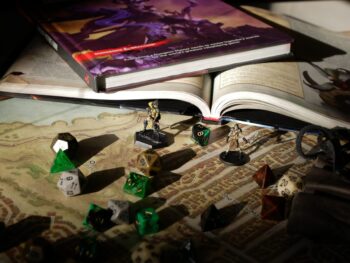
Explaining roleplaying to a non-gamer is one of the hardest things we’re asked to do. We want to share this hobby we love so much, but we often find ourselves in a catch-22 situation: it’s extremely difficult to explain roleplaying to someone who’s never done it, but once someone’s done it, they no longer need the explanation.

Below are several posts that could help when you’re called on to do the impossible:

[Image courtesy of pasukaru76 via Flickr Creative Commons]

Popularity: 6% [?]

Passing it On: Introducing New Players to RPGs

No Gravatar

We love this hobby of ours so much, it’s only natural we’d want to spread the word. We do our damndest to get our non-gaming friends to give this “roleplaying thing” a try. This is especially true if we’re far from other gamers and the only way to get a group is to build one ourselves.

But how do you run a game for an entire group of brand-new players? Especially when you’ve been playing so long, you can’t remember what it feels like to be brand-new?

This is the first in a series of posts with ideas to help you introduce new players to our illustrious time sink …er, pastime.

When Your Whole Group is New


Do the planning for them

New players are often overwhelmed by the character sheet alone. Are we expected to know all those numbers? How do we actually use the stuff that’s on there? Give brand-new players pre-generated characters, especially when you’re teaching an entire group of first-time players.

By using pre-generated characters, you make a lot of overwhelming decisions for the players. They don’t have to worry about choosing effective skills, powers, spells or weapons, because you’ve already done that for them. Too many choices become intimidating. Even first-time players realize that some choices would be more effective than others, but which ones?

Limiting choices was part of the success of the original D&D game, IMHO. And I think it’s one of the reasons D&D was wildly more successful than Traveller, another early RPG. Traveller had (and still does) an open-ended character generation system. Sure, you chose a branch of service and rolled randomly for skills, but you still had to create a role in the party.

Being from the Navy didn’t give a new player any ideas on how to actually play his character. It was entirely up to you to define your place in the universe. Great for an experienced player with a strong character concept and goals. But if you’d never played an RPG before, you really didn’t know what kinds of things your character could do. If you’d never played Traveller before, you really didn’t know what kinds of things your character could do.

Original D&D took care of that for you. You had only four classes (well, really six—dwarf and elf were treated like classes), each with a very distinct role in the party. Fighters fought, magic-users cast spells, clerics healed and thieves disarmed traps and opened locks. Each class had a built-in purpose that made them very accessible to brand-new players and this worked really, really well new players.

Choose your game system carefully. When you’re introducing a group brand-new players who’ve never roleplayed at all (as opposed to experienced players learning a new system), you want something that’s simple, without being too simplistic. Pick D&D over Rolemaster, Star Wars over Traveller, and anything over Amber (unless your entire group are die-hard Zelazny fans).

This is not the time for you to run a system for the first time. Pick something you’re very familiar with, so you don’t waste valuable teaching (and playing) time looking things up. Plus, if you’re constantly having to look up things, you make the game seem much complicated than it actually is. When you use a system you’re very comfortable with, you give the impression “See, this isn’t so hard. I don’t even have to look up the rules, it’s that easy.” It makes the system much more accessible.

Limit choices, but make sure you give some

If you’ve ever had toddlers, you know how effective an empowering it is to let them choose something from a limited and predetermined set of options. Do you want to wear the green pants or the new skirt? The same goes for new players. Do you want to use a healing potion or have the cleric use her last spell?

Don’t be afraid to make suggestions during play. Most brand-new players will be grateful for the advice, especially if you explain the reason behind your suggestions. Just remember that the players are free to choose something other than what you suggested. That’s part of the  learning experience.

Don’t make them feel stupid or wrong because they made an ineffective choices, just let the results of their actions catch up to them in-game. If one of their choices doesn’t work, explain afterwards why it didn’t work well and what might have worked better. Never imply it was a stupid or bad decision. Instead, use language like “less effective”.

Take it slow

Plan a short adventure. While you may consider a mission to stop an ogre from carrying off the nearby town’s livestock dull and routine, the players have never done it before. They’re not going to feel cheated because the “dungeon” is nothing more than a three-room abandoned farmhouse and the “treasure” is a masterwork (non-magical) sword and a single healing potion. And if your adventure doesn’t look like it will fill and entire game session, remember that you’ll be stopping frequently to answer questions and give explanations. It’s much better to end too soon than to go too long.

Give out information as the players need it

Don’t try to explain the entire character sheet at the beginning of the adventure. You’ll just confuse the players and they won’t remember the explanation, anyway. Instead, explain each section just before the players need to use it. Explain initiative as they’re getting ready for combat. Explain lock-picking when they encounter that first chest. Because they then immediately use that information, they’ll remember it better the next time they need to use it.

When you explain something, also explain why it’s done that way. Explain that you roll for initiative because you need to know in what order things will happen. Explain that you go around the table in initiative order because faster characters get to act first and because it helps you make sure you haven’t missed anyone. While this will help the players remember what to do next time, you’ll probably still need to remind them of the details the first several times they do something.

Follow their cue

Go through the adventure at they players’ pace. If they’re having trouble with combat, add in a few more easy fights. If they mastered skill use on the first go, make the next set of skill challengers a little bit harder. If they want to spend 40 minutes real-time looking for secret doors, let them, as long as everyone is having fun with it (and, if they look that hard, consider letting them find one, even if it just leads back to a room they’ve already explored). Be prepared to change things to fit the group even more than you would for an experienced group.

Make learning the goal

Don’t get hung up on finishing an adventure in the first game session. Your goal should be on teaching the game, not accomplishing the mission. If you’ve chosen a small enough adventure, this probably won’t come up. If it does, remind yourself that your real goal is to encourage these players to come back for more. Sure, the players will feel great if they save the day, but it’s much more important that they have fun.

————-

This post is a slightly expanded version of a post on the rpgGM.com homepage: Some Tips for Introducing New Players to RPGs. Next time we’ll cover adding a brand-new player to a group of experienced players.

[Image courtesy of tim_and_selena via Flickr Creative Commons]

Enhanced by Zemanta

Popularity: 6% [?]

Now on Kindle

No Gravatar
English: Third generation Amazon Kindle

Image via Wikipedia

Just a quick note this week to tell everyone that Evil Machinations is now available on your Kindle.  Just search the Kindle store for “Evil Machinations” and it should pop right up. And, as usual for Kindle blogs, you get a free 14-day trial subscriptions, after which you pay $0.99 per month.

I’m also looking into the possibility of making it available for the Nook, as well. Can’t say when that will happen, though…


Enhanced by Zemanta

Popularity: 6% [?]

Top 11 for 2011

No Gravatar

I can’t believe the end of the year is on us already. It’s been a good year for me and I hope for you, too.

Here’s the eleven most popular posts this year:

  1. Character Questionnaire: Just what the name says–it’s a character questionnaire to help GMs and players alike flesh out important characters. This has been the number one favorite page since Evil Machinations began in 2009.
  2. Where are we again?” Creating Unique Fantasy Cities and Towns: List of on-line resources that can help you create cities and towns for your game world.
  3. February Blog Carnival: Worldbuilding: Check out the comments of this post for great links to blog articles about worldbuilding. This was the introductory post for when I hosted the RPG Bloggers blog carnival in February of this year.
  4. Building Better NPCs III: Character Webs: What are character webs and how can you use them to help bring your NPCs to life. Also a perennial favorite post.
  5. X Marks the Spot: 11 Map Making Tutorials: Another list of on-line resources, this one on making great maps for your game.
  6. And *Then* What Happened?: Using Adventure Seeds/Hooks/Starts/Ideas: Ever come across an adventure seed you really wanted to use, but you couldn’t figure out how to turn it into a full adventure? This post is the first in a series that can help.
  7. Creating the Adventure Outline: Using Adventure Seeds/Hooks/Starts/Ideas, pt. 9: Another post in the above series, this one on how to develop you idea into game outline or flowchart to make running that adventure a little easier.
  8. Handling Problem Players: A list of web resources with great ideas on how to handle problem players.
  9. Finding Events: Using Adventure Seeds/Hooks/Starts/Ideas,  pt. 8: How to come up with the encounters and challenges that make up an adventure.
  10. Campaign Worksheet: The campaign worksheet I use when creating a new campaign.
  11. Beyond ‘Fred’: Russian Names for Characters: A list of Russian names for PCs and NPCs.

There they are: the top eleven posts for 2011. Thanks to all my readers–you’re the reason I’m still here and looking forward to a great 2012.

Popularity: 10% [?]

Need Ideas? Check Out Sea of Stars

No Gravatar

In my continuing and irregular series of my favorite blogs, we come to Sea of Stars. This is great site for items and ideas to steal and use for your own games.

If your the kind of GM that gets inspiration by reading campaign logs of other people’s games, Sea of Stars has several for you to choose from. From Pathfinder to Legend of the Five Rings to Shadowrun, there’s a wide variety of genres and systems to look at.

Sea of Stars also has several good articles on game theory and gaming advice. For some solid advice on playing evil characters, check out Moral Dilemmas: Playing Evil (and I’m not just recommending it because he links it back to this blog ;) ). Genre Resources is just what it says it is: a list of resources for various gaming genres.

But where this blog really shines is its collections of things–magic items, monsters, people–that you can use in your own games. I like to check the blog for it’s Tuesday Magic Items. The site’s owner, Sean Holland has described over 100 different magic items, from books, to rings, to wands, weapons…even a box of servants.

Sean’s also creating the Sea of Stars game setting and is a fellow member of the Gamer Lifestyle program. You can check out the progress of that here: Sea of Stars RPG

So if you’re needing some item to round out a monster’s hoard or a new monster to challenge your players (complete with 3.x/Pathfinder stats), this is a site to check out.

Enhanced by Zemanta

Popularity: 15% [?]

18 Adventure Archetypes

No Gravatar

In The Adventure Creation Handbook, I talk about using adventure archetypes as a way to help you develop plot details. Below are 18 adventure archetypes, along with the plot elements each one generally needs to be successful.

Archetype

Needs

Babysitting Someone or something to watch over, someone trying to capture what’s being baby sat, a map of the “sitee’s” location
Escort Thing or person to escort, place to escort them from, place to escort them to, map of route, something or someone trying to prevent them from getting there.
Raid Place to raid, item(s) to obtain in raid, guards, map of location, defensive measures/traps.
Kidnapping Someone to kidnap, guards, traps, and other defensive measures to prevent kidnapping, reason for kidnapping the victim, Location to bring victim to once kidnapped.
Exploration Unknown area to explore, random encounter tables, perhaps reason for exploring
Rescue Someone to rescue, a place to rescue them from, defensive measures to prevent rescue, reason why rescuee was taken
Robbery Place to rob, item to obtain (can be specific item or general type of item, such as “valuable”), defensive measures to prevent theft.
Bounty Hunt Person(s) to hunt, bounty reward, person or organization that wants huntee found
Breakout/Escape Jail, defenses to prevent escape, person to break out (if not the PCs themselves), reason why prisonner(s) is/are being held, locations of other prisoners, location of target in prison.
Assassination Person to assassinate, location of victim, person who wants assassination done, reason for assassination
Hijacking Vehicle(s) to be hijacked, driver(s) and passengers of vehicles, person who wants the hijacking done, reason for hijacking, hijacker’s demands, location to take vehicle(s) to.
Bug Hunt Critter to hunt, reward for successful hunt, location of critter, any defenses critter may have built
Smuggling Item or person to smuggle, authorities looking for same, authority checkpoints and personnel to carry out inspections, vehicle to smuggle with, location to take cargo to.
Salvage Wreck in hard-to-reach location, map where wreck is located, treasure to salvage, possibly rumors of treasure’s existence, possibly other group(s) also trying to salvage treasure.
Scam Marks (people to scam), a plan, possibly assistants
Spying Information to gain, plan to get same, people/location to get it from, people who want the information
Tournament Events to compete, other competitors, location of tournament, reward(s) for winners
Enhanced by Zemanta

Popularity: 26% [?]

Beyond ‘Fred’: Names for Victorian Games

No Gravatar

Everyone has trouble coming up with character names, at least occasionally. Especially GMs, who frequently have to come up with names on the spur of the moment. That’s what this series, “Beyond ‘Fred’” is all about: providing lists of names from other times and cultures so you can find a name that feels right for the time and place of your game.

In this series, I’m more interested in finding names that capture the feel of various game settings. Historical accuracy is not a factor here. In the spirit of my new Castle Falkenstein campaign, here’s a list of names common in Victorian England and America:

Male Names

  • Aaron
  • Alonzo
  • Ambrose
  • Barnabas
  • Bartholomew
  • Bernard
  • Byron
  • Cecil
  • Cyril
  • Clarence
  • Clement (Clem)
  • Clinton (Clint)
  • David
  • Edward (Ned)
  • Edwin
  • Eldon
  • Ernest
  • Ezra
  • Francis
  • Franklin
  • Fredrick
  • Gabriel
  • Garrett
  • Harland
  • Harrison
  • Henry
  • Horace
  • Isaac
  • James
  • John
  • Jasper
  • Julian
  • Lawrence
  • Leander
  • Louis
  • Maurice
  • Maxwell
  • Merriweather
  • Micajah
  • Morris
  • Nathaniel (Nate, Nathan, Nat)
  • Nimrod
  • Oral
  • Orville
  • Patrick
  • Perry
  • Peter
  • Reuben
  • Richard (Dick, Rich)
  • Samuel
  • Simeon
  • Thaddeus
  • Thomas (Tom)
  • Victor
  • Walter
  • Wilfred

Female Names

  • Abigail (Abby)
  • Agnes
  • Beatrice
  • Charity
  • Charlotte
  • Chastity
  • Constance
  • Dorothy (Dot)
  • Elizabeth (Bess, Betsy, Bessie, Eliza, Liza, Lizzie)
  • Eudora
  • Eva
  • Fern
  • Fidelia
  • Frances
  • Flora
  • Geneve
  • Genevieve
  • Grace
  • Hattie
  • Helene
  • Hester
  • Irene
  • Ivy
  • Jessamine
  • Josephine
  • Judith
  • Katherine
  • Lenora
  • Letitia
  • Lily
  • Lottie
  • Margaret
  • Maude
  • Mercy
  • Minerva
  • Molly
  • Nellie
  • Patsy
  • Parthena
  • Permelia
  • Phoebe
  • Rowena
  • Rufina
  • Sarah
  • Sarah Anne (Sarah Elizabeth)
  • Sophronia
  • Theodosia
  • Victoria
  • Winnifred (Winnie)

Biblical names were very popular in the Victorian Era, as were virtues (such as Chastity or Hope), and flowers (primarily for women). Both boys and girls were also given “nature” names, such as Forrest, Fern

Sources

Other “Beyond ‘Fred’” posts:


Popularity: 24% [?]

My RPG Bucket List

No Gravatar

I know–it’s been over a month since a posted. Blame that on a computer that decided to completely up and die at the beginning of October, which took nearly three weeks to get fixed and rest of the time catching up from being off-line. But it did give me some time to think about games — the ones I’ve run and the one’s I still want to.

I think every GM has a “bucket list” — the games you want to play before you “kick the bucket”. I’ve had to chance to try many of the RPG systems out there, at least for a single game session, but there are still a wide number of games I’ve been wanting to try my hand at. In no particular order:

  1. Call of Cthulhu: I’ve played a couple of sessions of this at conventions, but haven’t yet had the opportunity run it.
  2. Werewolf: the Apocalypse (2nd ed.): I’ve run Vampire and Mage games and I’ve run garou in cross-over games, but I haven’t yet had a chance to run a pure Werewolf game.
  3. Skyrealms of Jorune: An amazing game, with an incredibly rich game world, but one that requires a major time investment for the players as they learn an entirely new world from scratch–something neither I nor my players have been able to give right now. Oh, well, maybe after everyone retires…
  4. Shadowrun: I have run this, briefly, but would really like to give it another go. I just haven’t had the time to make over the cumbersome mechanics. I don’t know if the newest edition is better, since I haven’t had a chance to pick it up. Hmm, I wonder how much time it would take to convert to Savage Worlds…..
  5. Qin: This is also on my Amazon Wish List. I have an interest in ancient China and would love to get my hands on this one, I just haven’t felt like I could justify the cover price right now.
  6. In Nomine: One of my absolutely favorite games. I’ve played it extensively at conventions and the occasional one-shot here and there, but have never had the opportunity to run an actual campaign of it.
  7. Aberrent and Trinity: I did run a Trinity game for awhile, but I wasn’t at my GMing best during that time and would love to give it another go around with a campaign that ties both together.
  8. Ars Magica: Another personal favorite. I really like the historical basis of this game, as well as the flexibility of its magic system. This is on the “to do soon” short-list.
  9. Over the Edge: As you can probably guess from the rest of this list, I’ve got a thing for dark, occult conspiracy.
  10. Mark Miller’s Traveller: While I would enjoy running it, this is one I’d rather play than GM. Liked the first, black box, version of the game and was impressed by this edition when I skimmed through it.

But I am getting to cross one game off my list. This coming Saturday I’m sitting down with my group to create characters for a Castle Falkenstein game. It’s been a few years since I’ve been able to actually run a game (I’ve been playing D&D 3.5) and I’m really excited. So unless you tell me stop, you’re likely to get regaled with game session reports.

How about you? What are the games you’ve always hoped to play or run? What’s been sitting on your shelf for months or years, enticing you, that you’ve never had a chance to actually play?

[Image courtesy of donjd2 via Flickr Creative Commons]

Popularity: 19% [?]

Beyond “Fred”: More Anglo-Saxon Names

No Gravatar

You can’t have a character without a name. Yet, sometimes, creating the name is the hardest thing about making a character. “Beyond ‘Fred’” is a series that lists names from history and other cultures to help you find that perfect character name.

This time, we’re covering Anglo-Saxon names again, they’re just that cool.  I’m doing something I haven’t done before in this series, and that’s giving some pronunciation guides, along with the name’s meaning. That’s because Anglo-Saxon names have meanings that are so perfect for fantasy games. My pronunciations may not be exactly perfect, but they’ll work for fantasy games.

Because of that, I’ve repeated some of my favorite names from the first Anglo-Saxon names post, so that you have an idea of how to pronounce them. Of course, if it’s fantasy, you can pronounce these any way you want to ;) .

As always, I am more concerned with “flavor” than historical accuracy. So, without further ado….

Male Names

Æðelbald (A-thel-bald): nobly bright
Ælfhere (Alf-he-re. These are short “e”s, as in “red”): elf warrior
Ælfred (Alf-red): elf counsel
Ælfwine (Alf-win-e): elf friend
Æthelwulf (A-thel-wülf): noble wolf
Arlys (AR-loos): honorable
Baldric (Bald-ric): bold power
Banan (BAN-an): slayer
Baylor (BAA-oo-lore): horse trainer
Beorhtraed (BE-ore-tread. Short “e”, like “bed”): bright counsel
Betlic (BET-lick): Splendid
Boden (BO-den. With a short “o”, like “pot”): messenger
Cædmon (CAD-mon. With a short “o”, like “pot”): poet
Cæna (CHAIN-a): brave, fierce, keen, warlike
Canute (KA-noot-e): knot
Cedric (CHED-rick): renown leader
Dægal (DA-gall): dweller by the dark stream
Deogol (DE-o-gol): secret
Deorwine (DE-or-win-e): dear friend
Drefan (DRE-van): trouble
Eadmar (E-ad-mar): happy and illustrious
Earh (E-are): coward
Edwyn (ED-woon): valued
Faran (FAR-ann): advances
Firman (FIR-man): traveler
Frithuric (FRI-thu-rick): peace ruler
Fyren (FOO-ren): wicked
Galan (Gaa-laan): sing
Gar (GAAR): spear
Gifre (GIF-re. Short “i”, like “gift”):  greedy
Gim (GIM. Short “i”, like “gift”): gem
Godwine (GOD-win-e): God’s friend
Grindan (GRIN-dan): sharp
Halwende (HALL-wen-de): lonely
Hengist (HEN-yist): stallion
Ida (ID-a): rich
Irwyn (IRR-woon): sea lover
Kenric (KEN-rick): fearless leader
Landry (LAN-dree): ruler
Leodgar (LE-odd-gar): people’s spear
Lufian (LUV-ee-an): love
Magan (MA-gan): competent
Merwyn (MER-woon): good friend
Nyle (NOO-le): desire
Osbeorn (OS-beh-arn): divine bear
Rædan (RAW-dan): advisor
Raynar (RA-oo-nar): warrior of judgement
Raulf (RA-ulf): house wolf
Rowe (Rah-we): red-haired
Sar (SAR): pain
Scead (SKE-ad): shade
Scur (SKOOR): storm
Seleferth (SELL-e-ferrth): hall life
Selwyn (SEL-woon): fitting friend
Sherard (SER-ard): glorious valor. I’m guessing this is actually “Serard”, since I’ve never seen an “sh” sound in true Anglo-Saxon. It’s usually a modern interpretation
Sigefried (SIG-e-fri-ed): conquering peace
Temman (TEM-man): tame
Þunor (THOO-nar): thunder
Thurgis (THOOR-yis): Thor’s hostage
Wassa (WAS-sa): satyr(?)–uncertain about the exact meaning of this
Wilfrith (WIL-frith): resolute peace (my actual guess would be “stern friend”)
Winfrith (WIN-frith): friend of peace
Wulfric (WÜL-frick): wolf ruler

Female Names

Æðelþryð (A-thel-throoth):  noble threatener
Ælfgifu (ALF-gi-voo): elf gift
Ælflæd (ALF-lad): elf beauty
Æryn (AR-oon): elf-like
Ardith (AR-dith): good war
Bemia (BEH-mih-a): battle maiden
Bysen (BOO-sen): unique
Cate (KA-te): innocent
Cendra (KEN-dra): knowledgeable, understands
Cwen (KE-wen): queen
Cyneburga (KOO-ne-burr-ga): pledge of kindred
Darel (DAR-el): little beloved
Eadhild (E-ad-hild. The first “e” is a short e): rich battle maid
Eadlin (E-ad-lin): princess
Edita (E-dit-a): joyful
Eldrita (ELD-rit-a): prudent advisor
Erna (ER-na): reserved, shy
Faina (FA-in-a): joyful
Frithuswith (FRI-thoos-with. Both “i”s are short): peace strength
Gisa (GI-sa): hostage
Hreða (HRE-tha. The “hr” is an unvoiced r. Say ‘H’, then ‘r’ very quickly): an Anglo-Saxon goddess
Hrothwyn (HROTH-woon. The “hr” is an unvoiced r. Say ‘H’, then ‘r’ very quickly): famous joy
Leola (LE-ola. The “o” is short, like in “pot”): deer, swift (as a deer)
Maéda (Ma-ee-da):  maiden
Mildryth (MILLED-rooth): mild pledge
Muriel (Muh-ri-el): myrrh, perfumed
Ora (AH-rah): money
Orfa (AH-fah): courageous
Rowena (RAW-en-a): white skirt
Synne (SOON-ne): gift of the sun
Wilona (WILL-ahn-a): hoped for
Ymma (OOM-ma): work

[Image courtesy of micronova via Flickr Creative Commons]

Sources

Other “Beyond Fred” Posts

Popularity: 33% [?]

Quick Survey about Dealing with Players

No Gravatar

I’m currently writing a book about dealing with players. To that end, I’ve set up a survey to find out your concerns about working with players. Please take a few minutes to answer it:

Create your free online surveys with SurveyMonkey, the world’s leading questionnaire tool.

I’ll post the collective results of the survey in a separate post (don’t worry–it’s completely anonymous so you don’t have to worry about your players finding out what you’ve said about them ;) ).

Enhanced by Zemanta

Popularity: 16% [?]