How to Find Your Perfect Player, Part 2

This is the second part of a three-part article on finding players that are a good match for your game. Last week, I covered defining what your game is like. This week, I’m describing how to figure out the traits you (and don’t!) want in a player. The third part, which I’ll post next week, is about how to put it all together to create a “player’s wanted” ad.

Step Two: Favorite players

If you’ve GMed before, write down a list of your favorite players from previous games. Why were these players your favorites? What did they do (or not do) that made them so great? If you’ve never GMed before, think back over games you’ve played in. What players did you enjoy playing with? What was it about them that you liked so much? Do this for at least three previous games; you’ll want enough players to begin to see trends in what you like. Of course, if you’re new to the hobby, you may not have three previous games to draw from. In that case, just use as many as you’ve had. Even a single game will give you some useful information.

Write down each of your favorite player’s (or character’s) name—you just need something that will jog your memory. Next to their name, write at least one trait you particularly liked about them or the way they played. Maybe they were always respectful or maybe they always stayed in character. Or they learned the combat rules quickly and were willing to help others learn them. It could even be something as simple as they always brought great snacks or as complex as they found creative uses for spells. Notice if a particular trait appears in your list more than once. That means it’s most important to you.

Now rank your list of traits (just the traits; we’re done with the players’ names) in order of importance to you. Is “always stays in character” more important than “always on time”? Then place it closer to the top of the list. Now take a look at your top five traits. Those are the ones we’ll use when it comes time to write the player ad.

Step Three: Least Favorite Players

Now repeat step two, only this time, use your least favorite players. Who really got on your nerves with their constant droning of “In my game, I do…”? Who really set your teeth on edge every time they brought a combat to halt to bicker about an obscure rule that affects no one else in the game? Again, make a list of players and at least one trait per name that just wanted to send you screaming in the streets? Rank these traits by how much you hated them. You now have a “things to avoid” list. This won’t go in your player ad, but will be very useful when it comes to interviewing potential players.

This is an excerpt from the GM’s Field Guide to Players, the up-coming book from rpgGM.com, due to be released this fall.

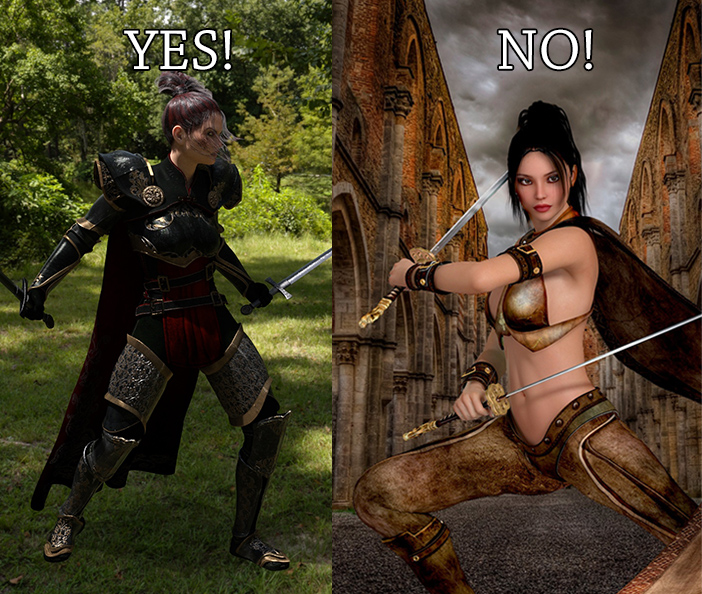
[Photo courtesy of Rodrigo Moraes via Flickr Creative Commons]

Other articles in this series

Enhanced by Zemanta

Popularity: unranked [?]

How to Find Your Perfect Player

In the beginning of this great hobby, you couldn’t be choosy about players–not if you wanted to play at all. Fellow gamers were few and far between and you took whomever was willing to sit down at your table and was willing to give this “roleplaying thing” a try. In some places in world, that’s still true today.

For most of us, however, things have changed for the better. Not only are there a wider variety of games available, there are also a far greater number of gamers. This means that, as GMs, we’re better able to select players who match our play style and, therefore, are more likely to enjoy our games. The question these days is often “How do I find the right players for my game?”

Step One: Define  your game

What are the qualities of your game? Is it story-focused and tightly scripted, like a movie, or is it a character-focused sandbox game? Do you favor mechanics over story? How much combat are your players likely to see? These are all questions that can help you match players to your game.

If, for example, you know that players in your games usually spend most of the time investigating and talking to NPCs, bringing in a player who lives for combat could be a recipe for disaster. Either you’ll have to change your play style to accommodate more fighting, or you run the risk of having a bored player who, since he can’t find a fight, is likely to go off and start one on his own. Now, if you want to bring more combat in your game, this could be a great way to do, since you’d have the Combat Monger’s experience to draw from.

In any case, because you know your what your own game will be like, you can convey that information to your prospective players and see if they like the kind of game you’re offering before they officially join.

This is turning into a much longer post than I expected, so I’m going to break it up into several parts. Next time, I’ll cover steps two and three–figuring out what traits you do and don’t want to have in your game. This is an excerpt from the GM’s Field Guide to Players, the up-coming book from rpgGM.com, due to be released this fall.

[Photo courtesy of Mel B. via Flickr Creative Commons]

Enhanced by Zemanta

Popularity: unranked [?]

Let me apologize to everyone who purchased a copy of the Adventure Creation Handbook in the last week. Due to technology issues outside of my control, I’ve been without internet since Sunday at 9:00pm, EST. I just got connected again 10 minutes ago (about 11pm Thursday, EST). I’ll be answering all of your emails individually soon. I’ve got to work my way down the list, but you should hear from me no later than this Saturday (30 July).

Popularity: unranked [?]

Next Product Underway

Players can be the most difficult parts of a game. More than once I’ve heard GMs lament “My game would be perfect if it wasn’t for the players.”

That’s a shame, because without players, we don’t really have a game. Yet, many of us can sympathize with the beleaguered GM above. Players, even (or should I say especially) the good ones take our ideas a make hash of them. What’s a poor GM to do?

That’s what my next product is about — how to work with players so that they become the best part of your game. I’ve tentatively titled it The GM’s Field Guide to Players (FGP, for short) and it’s to cover all aspects of dealing with players, from finding players for your game, to dealing with problem players, keeping good ones, introducing new ones to your game and how to run if you’re missing one. Players are the most critical aspect of our game; if you’ve got good players, you can even run without a prepared adventure. Yet most gaming books devote little to no space to this important subject beyond helping players build their characters. This book aims to fill in those gaps.

Right now, I’ve got the preliminary outline worked up and am doing some research. I hope to begin writing the first draft next week (I’ve got two weeks left until my budding high-schooler returns from his grandparents and I’m trying to cram in as much work as possible before he gets back. Wish me luck ;) ). As usual, I’ll keep you posted here as things progress.

[Photo courtesy of smalltownguy2 via Flickr Creative Commons]

Enhanced by Zemanta

Popularity: unranked [?]

Adventure Creation Handbook Now Available

Want to write your own adventures?

You can learn to write good adventures and The Adventure Creation Handbook will show you how. Maybe you’re searching for an original idea. Or maybe you’ve just looking for a way to take that exciting climatic battle you see in your head and put it into a form your players will enjoy. Wherever you are in the adventure creation process, this  book will guide you step-by-step through the process of creating an adventure for any genre, any game system.

Overcome creativity blocks and dry spells. The Adventure Creation Handbook describes several methods of coming up with adventure ideas your players and you will enjoy.

Customize plots for your group and your game. By using your players and their wants as a starting point, this method allows you make adventures your players will want to play.

Integrate adventures into your campaign. This method integrates the adventures into your game system and campaign world from the very beginning. No trying to shoe-horn or retrofit ideas that don’t really fit.

“GMs, if you want a recipe for creating great adventures, the Adventure Creation Handbook is for you. Cherie lays it all out for you in great detail, and leads you by the hand through all the steps needed to wow your players with awesome stories. I love this GM advice book and can’t wait for the next in the series.”
Johnn Four
http://www.roleplayingtips.com
http://www.campaignmastery.com
http://gamer-lifestyle.com

Add to Cart

What’s included:

  • A step-by-step method for creation adventures that covers
    • Generating the original idea
    • Translating that idea into a series of events by asking and answering questions
    • Putting the events in a meaningful order that’s flexible enough to take player whim into account
    • Developing incentives to entice your players to go on the adventure
    • Getting it all down on paper (or in the computer) so you don’t forget anything important
  • Suggestions for running your newly written adventure
  • A worksheet to help you put your ideas in order
  • A checklist so you don’t miss any steps
  • Printer-friendly black & white design. No heavily colored pages to eat toner.

“…I have to say it’s not only a gorgeous book with great use of layout and black and white images, but it’s the perfect size to get folks started creating better adventures.”
Fitz
Game Knight Reviews

In addition, when you purchase The Adventure Creation Handbook, you receive these free bonuses:

  1. Life time updates. You’ll receive a free copy of this book every time it’s updated or revised. No need to go searching for errata or buying the next version, just to have up-to-date information.
  2. An example of adventure creation using this method, illustrating each step.
  3. A booklet of GMing tips from my blog Evil Machinations.
  4. 90-day unconditional money-back guarantee.  No questions asked.

What’s it cost? $7 for the next 30 days. That’s a special launch price. After August 15, 2011, the price will go up to $10.

Add to Cart

Enhanced by Zemanta

Popularity: unranked [?]

14 Last Minute Tips to Customize a Published Adventure

Even if you don’t have the time or inclination to write your own adventures, you can still customize modules and other published adventures to tie them in better with your own campaign or PCs. Below are 14 quick ways you can add personal touches to someone else’s adventure:

  1. Substitute a recurring NPC from your campaign in place of one in the module.
  2. Change the name/race/gender of one or more of the NPCs.
  3. Change the type of some of the encounters to better reflect your game setting. Example: if your world doesn’t have many orcs, use kobolds or goblins.
  4. Add more opponents to one or more encounters to up the difficulty level.
  5. Subtract opponents from one or more encounters to lower the difficulty level.
  6. Change the location of the adventure.
  7. Substitute a trap for a monster.
  8. Substitute a monster for a trap.
  9. Replace one encounter with something unique to your game. Ex: change a published riddle to a questions about your settings history.
  10. If the adventure is a rescue or escort mission, make the rescuee or the person escorted an NPC connected to one or more of the PCs.
  11. Change the language clues are written in. For example, instead of common, have a clue written in Elvish/Latin/Solomani. If you want to make it more of a challenge, make it a language no one in the party knows.
  12. Give the PCs a map of the adventure area with errors.
  13. Substitute one of the treasure/reward for something unique to your campaign. Example: instead of a +3 sword, put in a legendary sword from your world’s history.
  14. Change the names in the adventure to ones that fit your setting.

This post comes from my newsletter Beg, Borrow, and Steal.  If you’d like to see more quick GM tips, you can subscribe to this newsletter free — just use the form in this blog’s sidebar. As an added incentive, you’ll receive a free eBook: How to Run Your First Convention Game.

Enhanced by Zemanta

Popularity: unranked [?]

I have an official release date now for The Adventure Creation Handbook. It will be available for purchase starting July 15th (that’s a Friday).

I’m offering a special launch price. Until August 15th, ACH will cost $7. After August 15th, it will go up to $10.

I’m also setting up an affiliate program. If you’d like to become an rpgGM.com affiliate, you’ll get 50% of all sales your affiliate link generates. I should have an affiliate page up in the next couple of days, so keep checking back here.

Popularity: unranked [?]

Adventure Creation Handbook Ready

The adventure creation handbook is finished and just about ready. I’m looking a release date of mid-July (haven’t settled on a specific launch date–there’s still a fair amount of back-end stuff to do).

I’ve gotten a lot of positive feedback so far from friends and family who’ve looked it over and I’m really excited about releasing it. The main response I’ve gotten is that after reading it, people immediately go looking for pencil and paper to get started designing adventures, which is exactly the result I was hoping for. The 48 page booklet will retail for $7 as a launch special, with the price going up to $10 after 30 days.

To sweeten the deal, I’m adding in a couple of freebies when you purchase the Handbook. One is a step-by-step example of the 6 W’s method. I decided not to include it in the basic booklet because I didn’t want to lock people into my way of doing things. My intent is to provide you with a tool you can customize to fit your own style and method. The second freebie is a mini-book of GM advice articles from my blog, Evil Machinations, edited and typeset into an easy-to-use handbook you can take with you anywhere you’re preparing for games. Both will be optional downloads that come free with every purchase.

With this project now almost shipped, I’m starting to look ahead to my next project. I’ve get several ideas, but I’d like your feedback. Let me know what you’d like from me next by leaving a comment on this post. The ideas I currently have are:

  • A campaign creation handbook, a start-to-finish guide to help GMs set up and run campaigns
  • A city creation handbook designed to help GMs of any genre build believable cities for use in their own campaign setting
  • A world-building handbook, which will probably be broken into several smaller books, since the topic of worldbuilding is so large. These would include a general overview of worldbuilding to get people started, a culture creation book, a language creation book, a races creation book, worldbuilding for fantasy games, worldbuilding for SF games and anything else that people want or I think would be useful.
  • A player guidebook for GMs. This would cover what to do to help your players have more fun in your games.
  • Something else I haven’t even thought of that you’d like to see.

Right now, I’m trying to decide between the campaign creation book or the city creation book. So, please, let me know what you’d most like me to cover next.

I’ll announce the actual release date here on this blog first, so keep checking back.

Enhanced by Zemanta

Popularity: unranked [?]

Is It the Time…or the Place?

Pocket watch, savonette-type.

Image via Wikipedia

When it comes to creating and organizing the events (or “encounters”) for the adventure you’re writing, there are a couple of basic approaches you can take.

  1. Organize by sequence of events (the time-line approach)
  2. Organize by where the events will happen (the location approach)

It’s a Matter of Time

In this case, each event triggers the next; the events happen in a specific sequence. Event B must come after event A and before event C. This type of adventure has it’s merits and drawbacks. On the plus side, it’s easy to keep the PCs moving through the adventure, since each event will tell the players what to do next.

On the downside, players often have their own ideas of where their characters are going to go and what they’re going to do next. You’ll need to build some flexibility into your timeline, or you’ll find yourself railroading your players. No one likes being told what their character has to do during a game. With practice, you’ll be able to create time-line based adventures that subtly guide the PCs through your planned sequence of events, but still feel like they’re the ones making the decision on what to do when.

It’s a Matter of Place

Sometimes your list of events don’t seem to need a specific order. In this case, it may be more useful to group your events by location. With this second approach, one event doesn’t necessarily trigger another. Instead, the events trigger when the PCs arrive at a particular location. If they don’t go to that location, those particular events don’t happen. The classic dungeon crawl is an example of a location-based adventure: events and encounters happen when the PCs find them. If they skip an entire section of rooms, they also skip the events that would happen in those rooms.

The advantages of this method are that players usually feel they have more freedom in location-based adventures. They can explore things in any order they choose and if the party splits up and goes to different locations, each group of PCs will encounter whatever events are set to take place in their particular area.

The downside to this approach is if the PCs skip a location, they may miss crucial clues, making it much harder for them to complete the adventure’s goal. You can overcome this by listing two (or even three) possible locations for an event to take place at, depending on where the PCs actually go during the game. Often, you’ll find yourself using a combination of location- and timing-based events.

————————

Product Update

I’m back at work on the final rewrite of the Adventure Creation Handbook, which I hope to finish this weekend. No guarantees, though. I’m in North Carolina, so in addition to dealing with fallout from last weekends tornadoes, our appliances have been giving out one-by-one. Add to that a new part-time job…well, my writing time’s been a little difficult to carve out recently. Things are looking much better ahead, though.

Once this rewrite is done, I’ll be starting the actual book layout. I’ll keep everyone posted on my progress here.

Enhanced by Zemanta

Popularity: unranked [?]

As you can probably guess, given the fact that the end of February has come and gone, The Adventure Creation Handbook has been delayed in production. I’m a one-person company and so when I take a major life hit, everything gets put on hold for a while. In this case, I lost an important member of my family on February 18th and am only now getting back to work.

I’m in the final stages of rewrite on the ACH. Then I need to do one final round of editing, gather illustrations and typeset and layout the entire book before converting it to PDF. At this point, I’m uncertain how long that will take, but I’ll keep everyone posted here.

Thanks in advance for your understanding.

Popularity: unranked [?]