- Image via Wikipedia

Once a month, I publish a newsletter of quick tips for busy GMs called Beg, Borrow & Steal. Some require advanced preparation to use, but most are designed to be last-minute tips you can add to your very next game session — even if that session is tonight. Below is a sample from Beg, Borrow & Steal #2. If you’d like to see more last-minute GM tips, please sign up for the newsletter in the left sidebar.
——————–
20 Unusual City Encounters
Tired of bar fights and pick-pocketing musicians? Do your players find city encounters boringly routine? Here’s 20 unusual (more or less) encounters to help liven up your city trips. Some of these could be played for humor — others are deadly serious and may make your players uncomfortable. All are designed to be used in any genre, though some may need tweaking for a good fit. Roll randomly from the list below or pick one that appeals to you. And, as always, twist, distort, fold, spindle and mutilate these ideas to fit your group and your campaign.
- A boy prostitute approaches one of the PCs (male or female) for sex. If the PC sends him away without any money, the group will later hear that his father beat him for coming home empty-handed.
- A bear-baiter loses control of his animal, which mauls him and then attacks the crowd. If the PCs kill the creature, the owner tries to bring a law-suit against them.
- A small girl asks the party to help her find her lost kitten.
- The PCs are in a side street whose only outlets are at either end. Two funeral processions enter, one from each side. Neither party will back up to let the other pass and the situation degenerates into a fist fight between the two procession leaders, with the characters in the middle.
- The PCs watch a church procession carrying an icon, relic, or statue. On the other side of the street, a disturbance erupts and in the ruckus, the holy item is stolen.
- A small child (age five or six) jumps out of an upper-story window. The PCs should have a chance to save her from harm. If questioned, she will tell them that she was trying to prove to her friend (still in the room above) that she could fly. The friend (also five or six) will corroborate the story.
- In a visit to an open-air market, one of the PCs trips over a tent rope that sends him sprawling into the nearest food display. The display contents go rolling out into the public street or market square, where they’re quickly gathered up by nearby beggars. The stall owner demands the PCs pay for the broken stand and the lost produce.
- The PCs come upon a crowd in the middle of stoning a woman for adultery. This is even better if it’s a woman one of the PCs seduced recently.
- In a very public place, a woman announces that one of the PCs is the father of her child. It’s up to you to decide if it’s true or not, or even if any of the party members have ever seen the woman before.
- One of the PCs is a dead ringer for the town’s mayor. People keep stopping her to solve their complaints and problems.
- The PCs get roped into judging a beauty contest (for either men or women). If you want to be truly evil, have one of the party members of the appropriate sex coerced into participating in the contest while the rest of his group are judges.
- One of the PC is accused of raping someone in the town. A twist would be that the accuser is male and the accused is female (“Your honor, she held a gun to my head and threatened to shoot me.”)
- One or more of the PCs mounts or vehicles are impounded by the local constabulary. They claim the PCs did not obtain the proper permits and must pay a fine to recover their lost transportation. The permit is fictitious — the locals are actually trying to make extra money off of unsuspecting visitors.
- The PCs come across a beggar child who’s only parent has just died. The city will not help the child (“If we aided one, we’d have to aid all of them and we just don’t have the resources to do that.”)
- A horse or working aid animal takes an instant dislike to one of the PCs and will attempt to bite or kick the PC every time they cross paths.
- The PCs hear sounds of domestic violence inside a nearby home. To up the ante, a child runs out of the house and begs the PCs to come help because “Daddy’s trying to kill Mommy.”
- A goat (from a farmer’s market stall or escaped from a petting zoo) chews a hole in one of the PC’s purse or pouch. Make a hidden roll to see if the PC notices. If not, she’ll be leaking small items from her bag until she either notices or there’s nothing left that will fit through the hole.
- A traveling musician sets her sights on one of the PCs and begins to follow him around, trying to woo him. You can make this as humorous (a harmless youth) or as serious (a stalker) as you like.
- A pet or small child becomes attached to one of the PCs and follows him around everywhere. If taken home, the pet/child escapes and seems to be able to find the PC, no matter where he is in town. This can be either very funny or very creepy, depending on how you handled it.
- The PCs stumble on or are asked to witness the public marriage consummation of a newly wedded couple.
Related Posts
- Location Worksheet. A worksheet to help you prepare setting for your game.
- Web Resources about Writing Adventures
- More Resources for Writing Adventures
- “Where are We Again?”: Creating Unique Fantasy Cities and Towns
Related articles by Zemanta
- Keeping up with the PCs: Part 1, The Secret Synergy Bonus (critical-hits.com)
- My Favourite PC Travel Game: Campfire Chats (campaignmastery.com)
- Downsize Your Disasters: GMing catastrophes in your RPG (campaignmastery.com)
- Heroes in Horror: When GM expectations and PC design don’t mix (gnomestew.com)
![Reblog this post [with Zemanta]](http://img.zemanta.com/reblog_c.png?x-id=5903065e-bb64-419c-ae00-09297f62ac41)
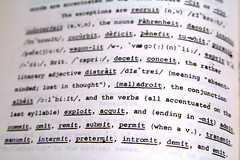
 Well, actually not about alphabets. While you can create a whole new alphabet for your language, it’s a lot of work to do just to create names. Especially since unless you’re writing out all of your game materials by hand, you’ve got to create either a true font or a set of
 ![Reblog this post [with Zemanta]](http://img.zemanta.com/reblog_c.png?x-id=cd662975-45ae-4b8b-a18f-1447e52a2635)

![Reblog this post [with Zemanta]](http://img.zemanta.com/reblog_c.png?x-id=71010a13-b89a-4fa8-a4eb-6129b4d20411)
![Reblog this post [with Zemanta]](http://img.zemanta.com/reblog_c.png?x-id=5c86ab2e-8010-4153-b0e5-62ea51e8ce82)

![Reblog this post [with Zemanta]](http://img.zemanta.com/reblog_c.png?x-id=422e1afc-6f4f-4be6-b869-fcf7d906d052)
 (Photo courtesy of
 ![Reblog this post [with Zemanta]](http://img.zemanta.com/reblog_c.png?x-id=100d32fb-8229-4b74-b69d-3d10bbdab0d4)